Computer Memory
2026-04-16
Share
What are the differences between DDR4 and DDR5 memory modules? How much spec is enough?
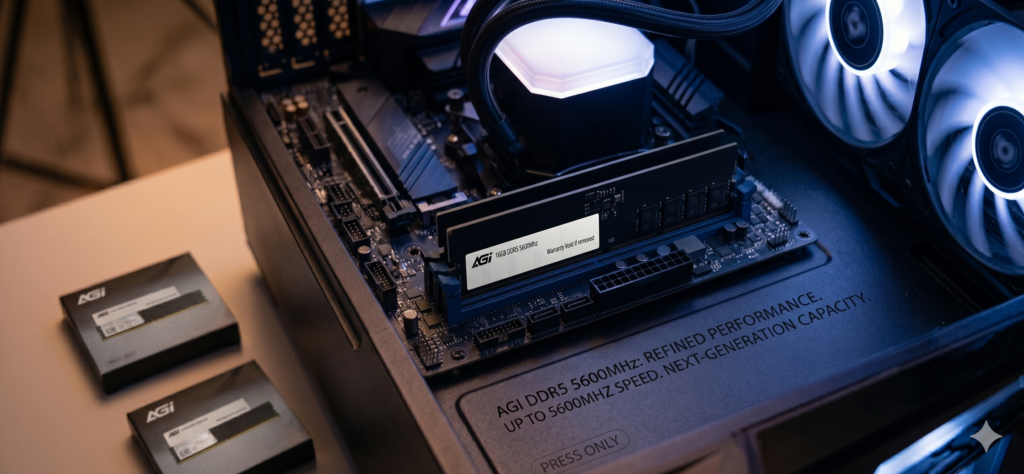
When building or upgrading a PC, the CPU and GPU usually get all the attention. However, as the system’s data hub, RAM speed and capacity are the hidden keys to multitasking and overall smoothness.
While the battle-tested DDR4 has reached maturity, the faster, higher-performing DDR5 has officially taken over as the mainstream and overclocking standard. This guide breaks down their differences in design and performance, helping you intuitively choose the right capacity for your needs.
| Category | DDR4 | DDR5 |
| Speed (Data Rate) | 2133–3600 MT/s | 4800–8400+ MT/s |
| Voltage | 1.2V~1.35V | 1.1V~1.5V |
| Bandwidth Efficiency | Lower | Higher |
| Single Stick Capacity | 4–32GB (Common) | 8–32GB (Common) |
| Compatibility | Supports DDR4 motherboards only | Supports DDR5 motherboards only |
| Overall Positioning | Mature & stable, lower price | Higher performance, overclocking mainstream |
| Usage | DDR4 | DDR5 |
| Office work, Web browsing, Multimedia | 8GB–16GB | Sufficient for general daily use |
| General Gaming | 16GB | Recommended capacity for most games |
| Multitasking, Design, Video Editing | Smoother performance when running multiple programs | |
| 3D Rendering, AI, Professional Creation | up to 64GB | Needs for large-scale professional workloads |