
eNewsIndustrial
Building the Memory and Storage Foundation for Next-Generation AI Computing
2026-10-13

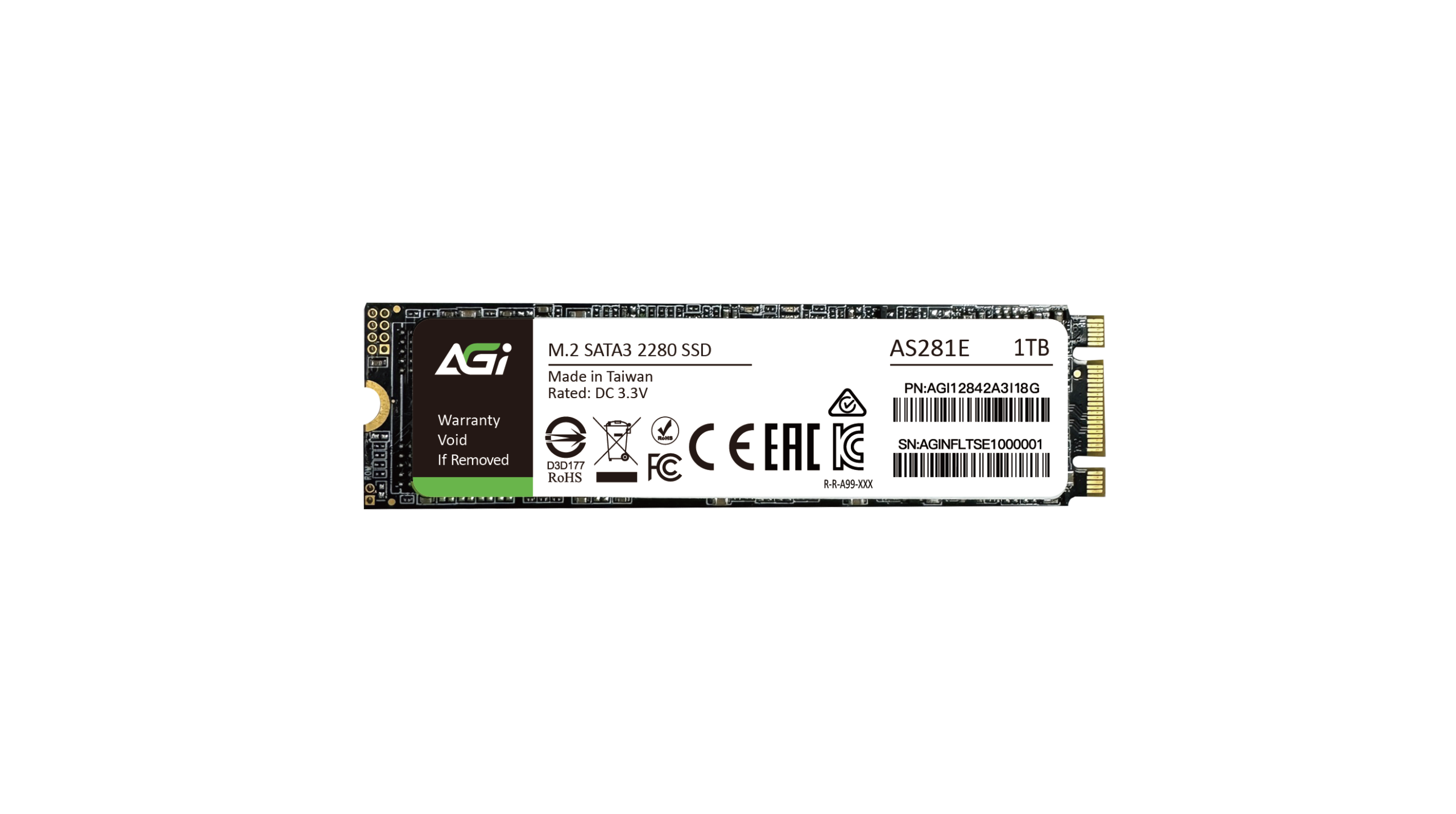
AS281E M.2 SATA Solid State Drive
KEY FEATURES

SLC Cache

3D NAND

LDPC Error Correction
Advanced Direct TLC Write Architecture for Stable Read/Write Operations
Rugged Durability for Mission-Critical Data Protection
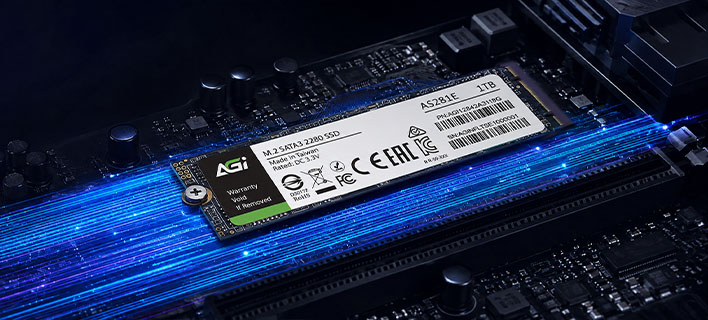
Intelligent Thermal Management for Ultimate Longevity
Capacity
128GB / 256GB / 512GB / 1TB
NAND Flash
TLC Flash
Form factor
NGFF 2280 M.2
Interface
6Gb/s SATA III
Dimensions(L x W x H)
80mm x 22mm x 3.5mm
Read/Write(Max)*
Sequential Read up to 540 MB/s, Sequential Write up to 500 MB/s
Shock resistance
1500G/0.5ms
Operating Temperature
-25°C ~ 85°C
Storage Temperature
-40°C ~ 85°C
MTBF
1,500,000 hours
Warranty
3 Years / TBW (whichever comes first)
Please try the following steps to resolve the issue:
Step 1. Turn off your computer and disconnect all other storage drives, leaving only the target SSD connected.
Step 2. Enter your motherboard's BIOS, restore the default settings, and ensure that both AHCI and UEFI modes are enabled. Save the configuration and exit.
Step 3. Boot into the OS installer. When you reach the drive selection screen, delete all existing partitions on the target SSD, and then proceed with the installation.
Windows 11, Windows 10, and modern Linux distributions include native support for PCIe NVMe drives and can be installed directly. Please ensure your motherboard's BIOS is updated to the latest version and configured to UEFI mode. If the SSD is not detected during the Windows installation process, you may need to download and load the specific storage controller drivers (such as Intel VMD/RST) provided by your motherboard or laptop manufacturer. For further assistance, please refer to the following link or contact Microsoft: https://support.microsoft.com/
This is normal. The discrepancy is due to system calculations and allocation of space for firmware, software, and data management, which help enhance performance and prolong lifespan.
Please check the following:
1. Hardware Connection: Ensure that the data cable, power cable, and motherboard slot are properly and securely connected.
2. System Initialization: Right-click the Start menu > select “Disk Management” > locate the unallocated SSD > right-click it and select “New Simple Volume” to initialize the drive.
Please refer to the installation guide provided. If product damage, installation errors (e.g., misalignment or poor adhesion), or other issues occur, do not forcibly disassemble the unit. Doing so may cause physical damage. Contact customer service and return the product for proper handling.
Yes, but the data transfer speed will be limited by the motherboard and will not reach SATA 6 Gb/s performance.
This is normal. The difference in capacity is due to the different calculation methods used by computer operating systems, along with a portion of the space being reserved for firmware, software, and data management. This reserved space helps enhance the solid-state drive's performance and extend its lifespan.
Actual performance may vary depending on your system hardware, software environment, and whether the SSD is used as a boot drive (with an OS installed). These variations are completely normal.
2026-10-13